
Freezing is not reversible
Miracle Muck is a modified PVA, a water-based adhesive in the same family as wood glue, formulated for wet-mounting liners and canvas. It is straightforward to store and clean up. There is one condition that ends it permanently: freezing.
A jug kept between 40 and 80 degrees Fahrenheit, out of direct sunlight, will stay in working condition for years. That range is the whole of the requirement. Drop below it far enough for long enough, and the adhesive is spoiled. A jug that has frozen cannot be recovered by thawing: there is no salvage step, no way to bring it back.
What makes this worth stating plainly is that spoiled Muck looks close enough to good Muck to get used. The consistency may seem off, but not obviously wrong. The first sign of trouble is usually a wrap that will not hold, noticed days later, with no clear cause at the bench.
Check a winter delivery before it goes into production
A jug can freeze in transit or in an unheated storeroom and arrive with nothing on the outside to show for it. If a delivery comes in during a hard freeze, bring it to room temperature before you open it or put it to work, then check the body and consistency before it goes near a job.
Good Muck is smooth and pours evenly. Adhesive that has separated, gone grainy, or will not come back together with stirring has likely been frozen: do not use it. Monarch does not control conditions during transit or in your receiving area, so checking a cold-weather delivery is your call to make, not ours.
Cleanup happens while it is wet
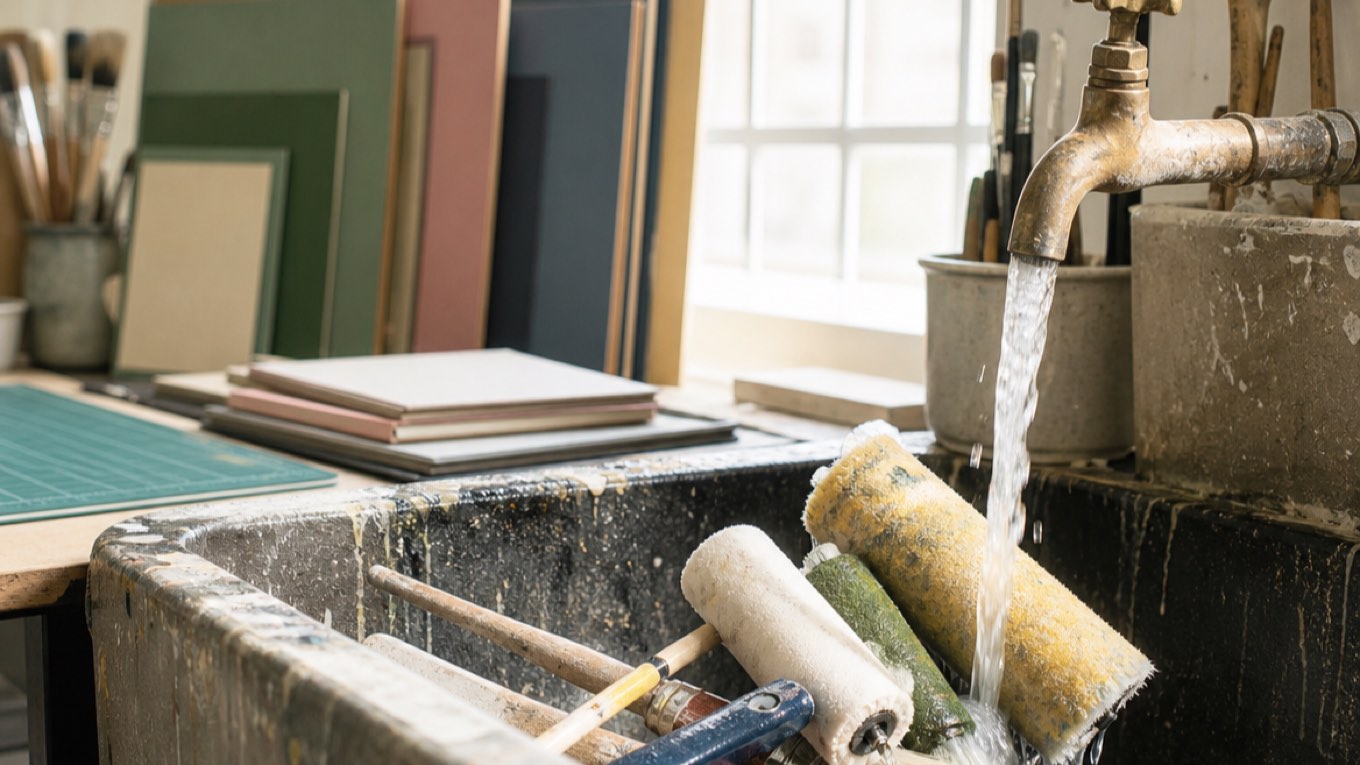
Brushes and foam rollers wash out with warm water. No solvent to buy, nothing to dispose of specially.
The one thing that matters is timing. Once the film has cured it is inert and will not wash off: that is the property that makes it good in a frame package and inconvenient in a roller. Rinse at the end of the job while the adhesive is still wet, not at the end of the day.
Buying it in the size a shop actually uses
Monarch stocks Miracle Muck in the one-gallon jug, the right size for a shop that wraps liners and mounts canvas regularly. Stored correctly, a gallon keeps for years, so buying ahead makes sense as long as the storage conditions hold. A jug ruined by cold costs more than the smallest size on any shelf.